
Nuclear Scare-Dismissed?
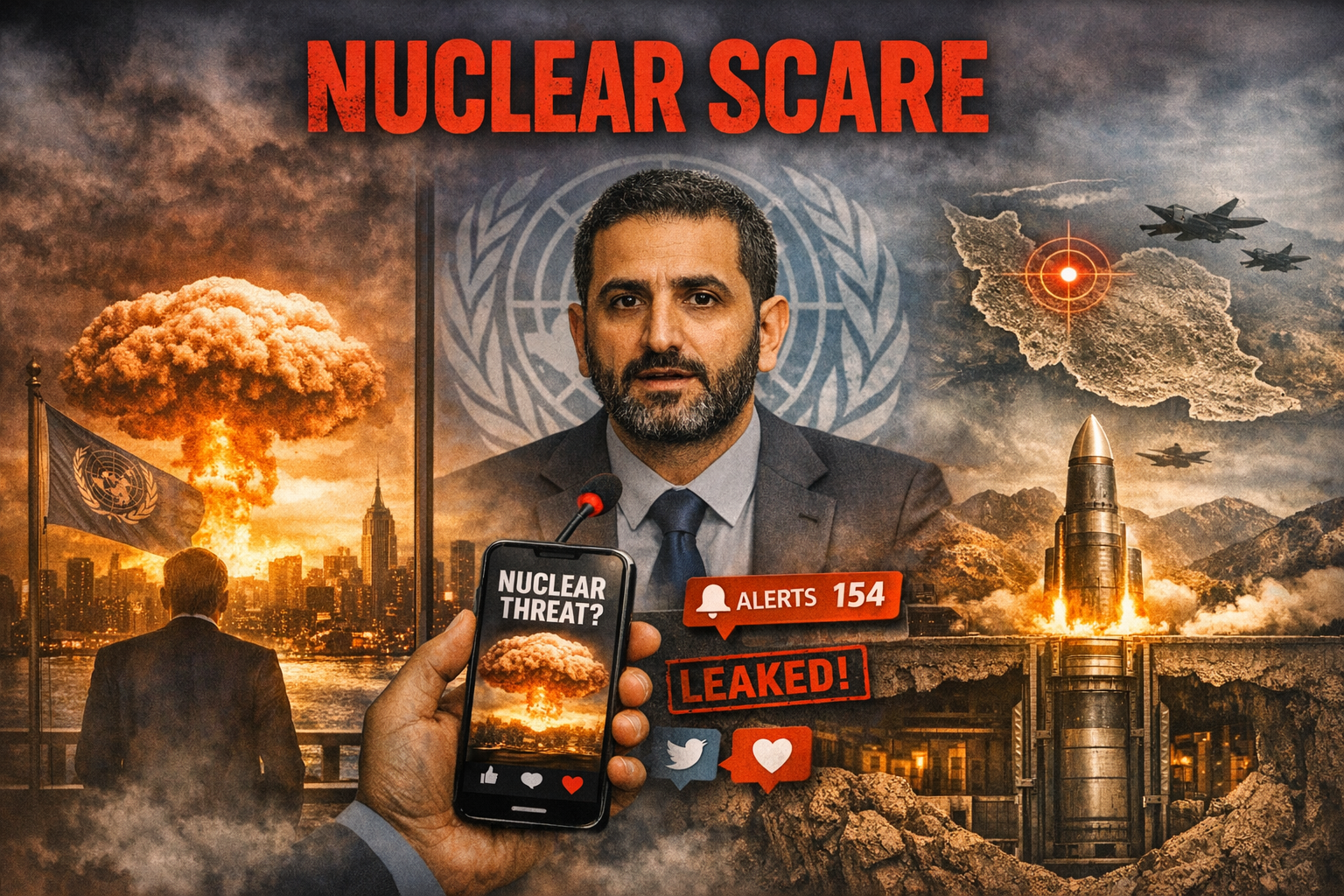
“A single flash may silence ten million voices — and still leave the world shouting.”
Art and poetry by James Hall.
By James Hall;
jameshall042999@gmail.com
We wrote about many nuclear war scares in our book The Sword of Damocles: Our Nuclear Age.
Today, March 31, we face a new one.
On March 27, 2026, Mohamad Safa, the Main Representative of the Patriotic Vision Association (PVA) at the United Nations, abruptly resigned from all of his UN‑related roles. In his resignation letter and posts on social media, he claimed—without providing evidence—that senior UN officials were quietly preparing for the possibility of a nuclear strike on Iran and were being influenced by “powerful lobbies.”
Safa said he could not remain in his position “in good conscience,” and he warned about the catastrophic human cost of any nuclear use near Tehran. His statements spread quickly online because of their dramatic tone, but they reflected personal allegations, not verified intelligence, and the UN issued no confirmation or supporting statement.
In the days since, numerous media outlets have circulated stories suggesting that the United States is preparing to strike Iran’s deeply buried missile bunkers with nuclear weapons. This appears to be a classic case of information cascading—where speculation feeds speculation, and fear begins to feel like fact.
True, beyond Mohamad Safa’s resignation, a few other signals have helped fuel the idea that the United States might consider nuclear strikes on Iran. These include leaked accounts of tense US–Iranian backdoor exchanges. Yet, these sources reflect anxiety, escalation, and worst‑case thinking—not confirmed plans. In reality, no credible reporting or intelligence has surfaced to indicate that the United States is preparing to use nuclear weapons, and the claims circulating today remain rooted in fear rather than fact.
More concern has arisen from reporting from the Institute for the Study of War and the Wall Street Journal, detailing that US negotiators recently presented Iran with a set of firm demands: dismantle the Fordow, Natanz, and Esfahan nuclear facilities; transfer all enriched uranium to the United States; and accept a permanent agreement with no sunset clauses. These terms were described as “non‑negotiable,” and President Trump warned Iran of “bad things” if no deal was reached. While none of this constitutes a nuclear threat, the hardline language led some analysts to interpret it as a sign that Washington might be willing to escalate militarily, adding fuel to the broader speculation.
Despite all the talk, it remains highly unlikely that the United States is preparing to use nuclear weapons against Iranian missile bunkers. There is no real evidence suggesting otherwise. US policy reserves nuclear weapons for only the most extreme circumstances—such as deterring or responding to a nuclear attack, or confronting a threat that endangers the nation’s survival. Using them first, especially against missile sites, is something that has been discussed only in theory, not as an actual policy option.
For decades, every administration has treated nuclear use as a true last resort because it would break global norms, risk uncontrollable escalation, isolate the United States diplomatically, and potentially draw in other nuclear‑armed states.
In short, the threshold for nuclear use is extraordinarily high—and this scenario does not logically meet it. We as a nation could not be that blind.
Ultimately, this “scare” seems to be less about a shift in nuclear doctrine and more about the fragility of public trust in a time of great tension.
The Sword of Damocles: Our Nuclear Age, now on Audible, Kindle and Amazon books.